 >
> In collaborative design formats like Process Modelling and Software Design, many possible alternatives can easily overwhelm the designer.
One person might try to put some order in the picture, leveraging the colour grammar, while others may get vocal and add more alternatives and variations to the table.
But unlike in the big picture, where we dealt with discovery and parallel reasoning was encouraged, in design formats, we are collaboratively solving a puzzle, and we need some discipline for that.
Prioritise having a visible baseline over visualising every possible branch of the exploration. You'll need something visible to start with. At the same time, you're not supposed to forget about the complexity of possible alternatives and corner cases: we are just postponing it. Hot Spots can be used as a placeholder for the complexity we are deferring to a later discussion.
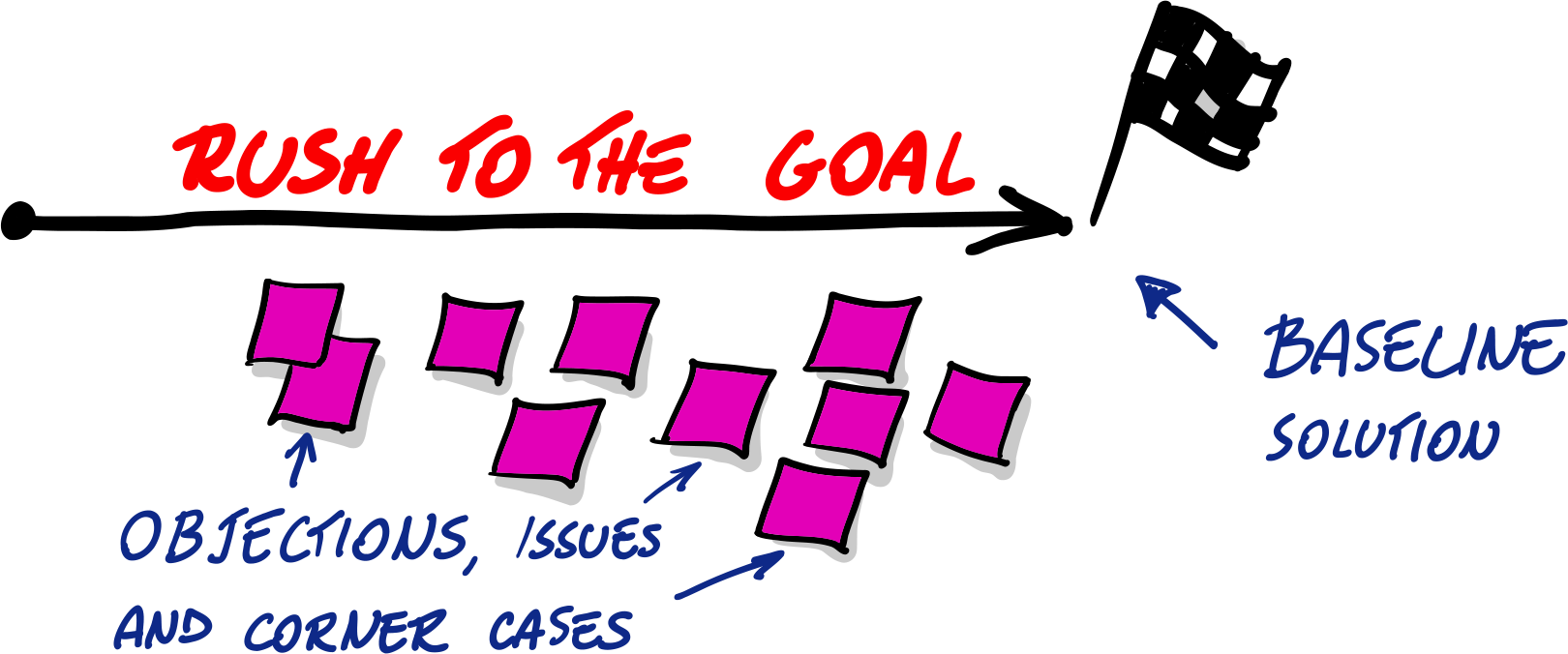
Also, remember that this complexity is not deferred indefinitely: we need to complete a scenario, making the key stakeholder happy, and then we'll come back and pick the most interesting hot spot to explore.
Establish some working agreements - like providing only quiet feedback, or having small rounds - to avoid swamping in complexity. There is no way you are going to solve all the puzzles at the same time.